Showing posts with label family activities. Show all posts

Monday, September 16, 2013

What are the Lulav & Etrog?

Important ritual objects used during Sukkot are the:
Lulav (pronounced loo-love) and
Etrog  (pronounced et-rog).

The lulav is actually made up of four different parts: a palm branch, a myrtle branch, a willow branch and a woven palm handle that keeps them all together. Lulavim (plural of lulav) are grown, prepared and shipped throughout the world from Israel, arriving fresh just in time for the holiday’s
celebration.

An important tradition and mitzvah is to say a special blessing and shake the lulav in six directions—north, south, east, west and up and down—to symbolize that God is everywhere. While doing this, we hold the lulav in our two hands along with an etrog. An etrog is a citrus fruit that looks like a big bumpy lemon and has a sweet fragrance.

Each of our classrooms is sharing a lulav and etrog from Israel with another classroom and this year for the first time we ordered etrogs for every class from a very special farm in California. Get ready to see us shake them!

Adapted from the Union for Reform Judaism's Holiday Happenings.

Friday, February 15, 2013

Shabbat is here....


Today we celebrated Shabbat with family and friends!  The children had the opportunity to create puppets and crowns for Purim.  On the the rug we used wooden blocks, straws, and magnatiles to build traps for Hamen and cool castles

Thank you all for coming!  Sasha and I hope you all enjoy your family time over February break!
Posted by Picasa

Monday, November 19, 2012

What a life for Chester!

The life of Chester...Chester's social life is unbelievable! That young Raccoon is a social butterfly! He spent last weekend at Josh's house. Chester went boot shopping, went to Temple, had a PJ party and danced the night away...That guys got some good moves! It was hard for Josh to bring Chester back to school, he wanted Chester to stay forever! Josh will get another turn to bring Chester home next year...2013!

Saturday, November 3, 2012

Belonging is Key

Children want to belong and understand how bad it feels not to belong. How many times have you heard one child say to another, "You're my friend, right?" And how many times when they are angry have you heard them say things like "You're not my friend" or "You can't come to my birthday?" Belonging, whether to a family, a synagogue, a club, or a classroom, helps children feel secure and guides then to learn social rules and expectations for behavior.

Think About It
Reflect back on your own connections with others at work or in your community. Perhaps you've served in the military or are active in the Jewish community or regularly gather wit extended family. What do these connections mean to you? How have these connections guided you in your life? Help the children i your life begin to understand their own connections to other, beginning with their own family.

Some Ideas
  • Help children build their identity as a member of your family. Put together a photo album that includes pictures of them as they are growing up as well as pictures of your immediate and extended family at all different ages. Share stories with your children about your own positive childhood memories.
  • Be clear with children about your family's values. When explaining rules and limits, think of saying, "In our family we (day please, don't eat meat, braid our hair)." When your child does something against family rules, say something like "Robinson children don't take things that don't belong to them."
  • Start family rituals such as eating spaghetti every Friday night or planting seeds on the first day of spring or reading books under a tree.
  • Help your child make friends by inviting another child along to join you at the park or join your family for supper.
Jenna Bilmes

From Beyond Behavior Management: The Six Life Skills Children Need, second edition by Jenna Bilmes, 2012. Published by Redleaf Press, www.redleafpress.org. Reproduced with permission. 

Special Moments

According to noted child psychiatrist Dr. Bruce Perry, children who have one or more trusted and loving adults in their lives have a huge advantage over children who don't. Having a strong relationship with an adult such as a parent, grandparent, or aunt encourages children to succeed and helps them survive the bumps they experience in the world outside their home. In our own busy and complex lives, it's good to find out that it's often the small efforts we make with children that can send them the message that we are there for them.

Think About It
Think back to your childhood. Who do you remember as a key adult in your like? What fond memories pop into your mind when you think about that adult? For me, it was one of my grandmothers. I remmeber her taking me grocery shopping with her, letting me use her cold cream on my hands after my bath, and teaching me how to make mashed potates. In all these things, te message was that she wanted me around and wanted to share her life with me. Remember your own special moments and try to pass them on to the important child in your life.

Some Ideas
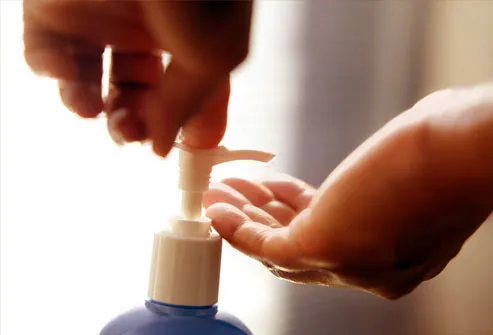
  • Rock and sing to your baby or young child. Smooth lotion on each other's hands.
  • Cook a meal together. Fix a broken item together. Fold laundry together. 
  • Spend five minutes with your child at bedtime. Turn off the TV and the cell phone. Just chat together. 
  • Plan a weekly lunch date with older children when you can sit together and chat as friends. 
Jenna Bilmes

From Beyond Behavior Management: The Six Life Skills Children Need, second edition by Jenna Bilmes, 2012. Published by Redleaf Press, www.redleafpress.org. Reproduced with permission.

Friday, September 28, 2012

What are the Lulav & Etrog?

Important ritual objects used during Sukkot are the:
Lulav (pronounced loo-love) and
Etrog  (pronounced et-rog).

The lulav is actually made up of four different parts: a palm branch, a myrtle branch, a willow branch and a woven palm handle that keeps them all together. Lulavim (plural of lulav) are grown, prepared and shipped throughout the world from Israel, arriving fresh just in time for the holiday’s
celebration.

An important tradition and mitzvah is to say a special blessing and shake the lulav in six directions—north, south, east, west and up and down—to symbolize that God is everywhere. While doing this, we hold the lulav in our two hands along with an etrog. An etrog is a citrus fruit that looks like a big bumpy lemon and has a sweet fragrance.

Each of our classrooms is sharing a lulav and etrog from Israel with another classroom. Get ready to see us shake them!

Adapted from the Union for Reform Judaism's Holiday Happenings.

Thursday, September 27, 2012

Sukkot is a Time for Tzedakah

During Sukkot, we are encouraged to also invite those in need into our sukkah to remind us that we have a duty to help those less fortunate than we are. This tradition provides a great opportunity for activities to reinforce our obligation to help feed the poor.


Try these ideas:
• Use a cardboard box to create a small sukkah at home to provide a space to collect nonperishable foodstuffs to donate to your local food bank or other shelter.

• Make a sukkah tzedakah bank by decorating a small box or berry crate like a sukkah and collect money to buy food for the poor. When it is full, either present it to the food bank or plan a trip to the grocery store to purchase a meal for a needy family or ingredients for our Rosie's Place casseroles.

From the Union for Reform Judaism's Holiday Happenings.

Friday, May 25, 2012

Easy Shavuot Blintzes

Blintzes are a traditional Shavuot food.  A very simple way to make homemade blintzes is to start the process with pre-made, store-bought crepes. All you need to do is create a family-pleasing filling!

Filling Ideas:
• Canned fruit pie filling or
• 2 cups ricotta cheese or dry cottage cheese blended with 1 egg, 2 Tbsp. sugar, 1 Tbsp.
margarine, 1 tsp. lemon juice, 1/2 tsp. vanilla.

Place a heaping spoonful of filling on the crepe. Fold over the opposite sides of the crepe and roll
up, jellyroll fashion. Then bake or fry blintzes.

Baking: Place blintzes in a greased baking dish and bake in a 400°F pre-heated oven. Bake 12-15 minutes.
Frying: Melt butter or margarine in a medium-sized skillet, on a burner that is set at medium –medium/high. Fry blintzes a few at a time, browning on both sides.

Serve blintzes with jam, sour cream or yogurt.

Getting the kids involved: Children can blend the cheese mixture and/or choose the pie filling. They can also place the filling on the crepes and roll them up. Frying should be done by adults only.

From the Union for Reform Judaism's Jewish Parent Page

Silky Snuggly Challah for Shavuot (and Shabbat!)


In celebration of Shavuot, make your very own challah doll! This activity is a great alternative for those who are allergic to wheat, for an easy no-cook rainy day project, or for anyone who has ever wanted their own silky snuggly challah to love.

Materials (per pair of challot):
-3 pairs of beige pantyhose
-fiberfill stuffing (polyester or cotton is fine)
-needle and thread (beige if you have it) or glue gun

Instructions:
Cut off the waist section of the pantyhose so that you have six "legs." Gather together the "toes" of three pairs each and sew together. You should now have what look like two very limp unbraided challot. Next, stuff each of the "legs" full of stuffing, filling them about 3/4 of the way. Tie a loose knot in the end of each leg. Now, braid each of your challot and sew up the other end. Next, give your challot a big hug!

More family Shavuot ideas from My Jewish Learning.

Thursday, May 24, 2012

A Shavuot Flower Walk


And he carved all the walls of the house round about with carved figures of cherubim and palm-trees and open flowers, within and without. (1 Kings 6:29)

On Shavuot there is a custom to decorate the insides of our synagogues and homes with beautiful flowers. Shavuot is also a wonderful opportunity to enjoy some time in nature.

But he himself went a day's journey into the wilderness, and came and sat down under a broom-tree. (1 Kings 19:14)

Go on a nature walk in a park or area of conservation land, or find a place that sells flowers or fruits grown locally. See how many different colors you can find, and how many of the seven species are available to pick or buy (Deuteronomy 8:8 enumerates these: "A land of wheat and barley and vines and fig and pomegranates a land of olive oil and [date] honey").

The desert shall rejoice and blossom; like the crocus it shall blossom abundantly, and rejoice with joy and singing. (Isaiah 35:1-2)

Go for a nature walk! Collect wildflowers and other colorful flowers and fruit to make a centerpiece for your holiday meal, or take pictures of fruits and flowers and create a special Shavuot collage. You may wish to write (in English or Hebrew) one of the biblical quotations above on a large piece of paper, and then decorate the border with wildflowers, leaves, or juice from deep colored berries.

More family Shavuot ideas at My Jewish Learning.

Wednesday, May 23, 2012

Shavuot Sleep Over

It is a tradition on Shavuot to participate in a Tikkun Leil Shavuot, which is an evening of Torah study that sometimes extends until dawn. One tradition for this session involves studying a part of each book of the Bible, as well as parts of the Talmud, Mishnah and other Jewish texts. In order to cover as many of the sacred books as possible, the initial line of each Torah portion is read, along with verses and lines from all the other texts.

Without keeping your children awake all night, devoting some time on this holiday to Jewish study will add significance to your holiday observance. Guided study materials for families to use on Shavuot can be found at Family Shabbat Table Talk on the Union for Reform Judaism web site.

At school we'll be studying torah "all night long" at our school wide PJ Party this Thusday (Rainbow class) and Friday (all other classes) mornings!

Tuesday, May 22, 2012

What is Shavuot?


Shavuot is celebrated exactly seven weeks after Passover; it commemorates the giving of the Torah at Sinai and celebrates the late spring harvest. These three hallmarks of the holiday gave rise to its names: Shavuot means “weeks”; Z’man matan torateinu is the season of the giving of our Torah; and Chag habikurim refers to the festival of first fruits, when the farmers of Israel would bring first fruits of the harvest to Jerusalem as a sign of thanksgiving.

Many unique customs are associated with Shavuot. Moroccan Jews begin the evening festival meal by reciting the Kiddush (the blessing over the wine) and then taking a few matzot that have been saved from Passover, breaking them into small pieces and blending them with a mixture of milk and honey.The matzah, a reminder of the escape from Egypt, combines with the sweetness of the newly received Torah. Moroccan Jews taste the matzah, milk and honey mixture before the meal to symbolize that Shavuot is the conclusion of the Exodus from Egypt. One could say that we left Egypt in order to have the experience of collective revelation at Sinai and receive the Torah.

Many communities decorate their synagogues and homes with flowers on the eve of Shavuot. Jewish tradition teaches that although Mount Sinai is in the desert, when the Torah was given to the Jewish people it bloomed with flowers. Syrian Jews bring bouquets of flowers to the synagogue. An old custom among Ashkenazi (Eastern European) Jews was to create paper cuts of flowers, particularly roses, to display in the windows of their homes for this holiday.

From The Jewish Parent Page, Union for Reform Judaism.

Thursday, April 5, 2012

A New Tradition: A Fig

Rabbi Paula R. Goldberg and Rabbi Shira H. Joseph wrote a women’s Haggadah called The  Matriarch’s Dance: A Celebration of Transformation and Redemption. In it, they added a fig to the seder plate. If you choose to incorporate this symbol, do so after the descriptions of and blessings for the matzah, maror—bitter herbs—and korech—sandwich of matzah, maror, and charoset, inspired by Hillel’s tradition.

Point to the fig and say, “Seder plates in modern times often have new symbols added, representing our willingness and ability to transform the tradition and ourselves. Haleilah hazeh, this night, we add the t’einah, fig, to our seder plates. In The Song of Songs, the fig represents the sweetness and renewal of the springtime. To the ancient rabbis, the fig was a symbol of the sweetness of learning Torah. For us, the t’einah is a symbol of the future. Its sweetness represents the sweet vision of peace and justice to which we dedicate ourselves. The fig holds the promise of a world transformed, a world in which ‘all will sit under their vine and their fig tree and none shall make them afraid’” (Micah 4:4).

From the Union for Reform Judaism's Jewish Parent Page

Wednesday, April 4, 2012

The Mitzvot & Traditions of Passover

  • It is a mitzvah to participate in a Passover seder.
  •  It is a mitzvah to eat matzah and to avoid chameitz*—leavened products—during the seven days of Passover.
  • It is a tradition to ask questions on Passover.
*Chameitz is any leavened product that is made from one of the following five grains: wheat, rye, oats, barley, or spelt. A grain product is leavened if yeast has acted upon it. The action of yeast fills the grain with tiny bubbles, causing it to rise or grow. Flour mixed with water becomes chameitz after eighteen minutes. This is the time it takes for yeast to begin working. Matzah for Passover must be made in under eighteen minutes.

Over time, Ashkenazic (Eastern European) Jews and Sephardic Jews developed different food  prohibitions and traditions for Passover. Ashkenazic Jews added rice, corn, peas, beans, and peanuts to the list of foods forbidden on Passover. One suggestion about how this law evolved is that these foods expand with water during the cooking process, giving them the appearance of rising or growing. Sephardic and many Israeli Jews eat these foods on Passover.

Discuss as a family what food laws you will observe during Passover. What will make your observance of Passover more meaningful?

From the Union for Reform Judaism's Jewish Parent Page

Tuesday, April 3, 2012

The Story of Moses... in Legos!

It is believed that the obligation to tell the story of the Exodus was observed by Jews' ancestors ever since the actual Exodus itself.  Telling the story of Moses to our children is a mitzvah.  Looking for a way to engage your children in the story?  Click here to print and read the story of Moses, illustrated by Lego creations, over the next few days and again at your Passover seder.  Be sure to review it first as it contains the full story.  It might even inspire you to get out the Legos and build some Passover themed creations of your own.  Thank you to Rabbi Todd for compiling the book and story to make it easy to print at home.  The original can be found at The Brick Testament.

Questions, Questions, Questions

One of the many questions that are asked on Passover is, “What makes this night different from all
other nights?” The seder is an interactive story that attempts to answer all the questions raised
during the celebration. The questions of children prompt the seder. It is recorded in the Talmud
that Rabbi Akiva, in order to ensure that the children stayed awake and interested during the
lengthy ritual of the seder, would distribute treats of toasted nuts to them before
the festive meal.

In addition to the Four Questions asked at the seder table, encourage your children to ask and to
answer additional questions. Here are a few to get your family started:

•   Imagine that you were a slave in Egypt. What was the hardest part of your life?

•   What is your favorite part of the seder?

•   If you could go back in time all the way to the Exodus from Egypt, whom would you want to meet
and what question would you like to ask?

From the Union for Reform Judaism's Jewish Parent Page

Monday, April 2, 2012

On the Seder Plate

During the course of the Seder, the items on the Seder plate are pointed out, lifted up and displayed, and explained.

On the Seder plate (use either a special one for this purpose or a regular dinner plate), include:

• Shank bone—zaro’ah, symbolizes the lamb that was sacrificed in ancient days

• Roasted Egg—beitzah, represents the Passover offering of ancient days as well as the wholeness and continuing cycle of life

• Bitter herbs—maror (horseradish or romaine lettuce), reminds us of the bitter lives of the Hebrew slaves

• Charoset (the mixture of apples, nuts, sweet wine, cinnamon and sugar in the Ashkenazic fashion or dates, nuts and sweet wine in the Sephardic tradition), reminds us of the bricks and mortar made by the Hebrew slaves

• Greens—karpas, symbolizes the springtime of the year when Passover takes place

From the Jewish Parent Page of the Union for Reform Judaism

Saturday, March 31, 2012

Family Activities for Passover

Involving your whole family in the preparations for Passover will help create memories and build Jewish life skills. Finding jobs and tasks that are age appropriate for family members will allow them to successfully participate in and contribute to the Seder and holiday preparations. Publicly acknowledging the contributions of each family member helps develop confidence and self-esteem.

10 Ways to Involve Your Family in Passover Preparations

1. Cleaning the house and getting rid of the chametz (leavened products)
2. Finding special Passover recipes
3. Writing the shopping list
4. Preparing the food for the Seder or the Seder plate
5. Setting the table
6. Making decorative place cards
7. Learning the Four Questions in Hebrew and/or English
8. Hiding the Afikoman
9. Finding the Afikoman
10. Sharing in the reading and discussion of the Haggadah before, during and after the Seder

From the Jewish Parent Page of the Union for Reform Judaism

Thursday, March 1, 2012

Chester the raccoon really get's around town!


Chester has quite a social life! He really get's around! Chester went to Florida with Rachel last week! He spent time with Hannah and her family over the winter break. Chester also had the opportunity to go to the playground and bowling with Jacob. Most of the children had Chester come to visit with them two times already. That guy sure is a lot of fun!

Stay tuned for updates on Chester's home visits with the Tel Aviv children!